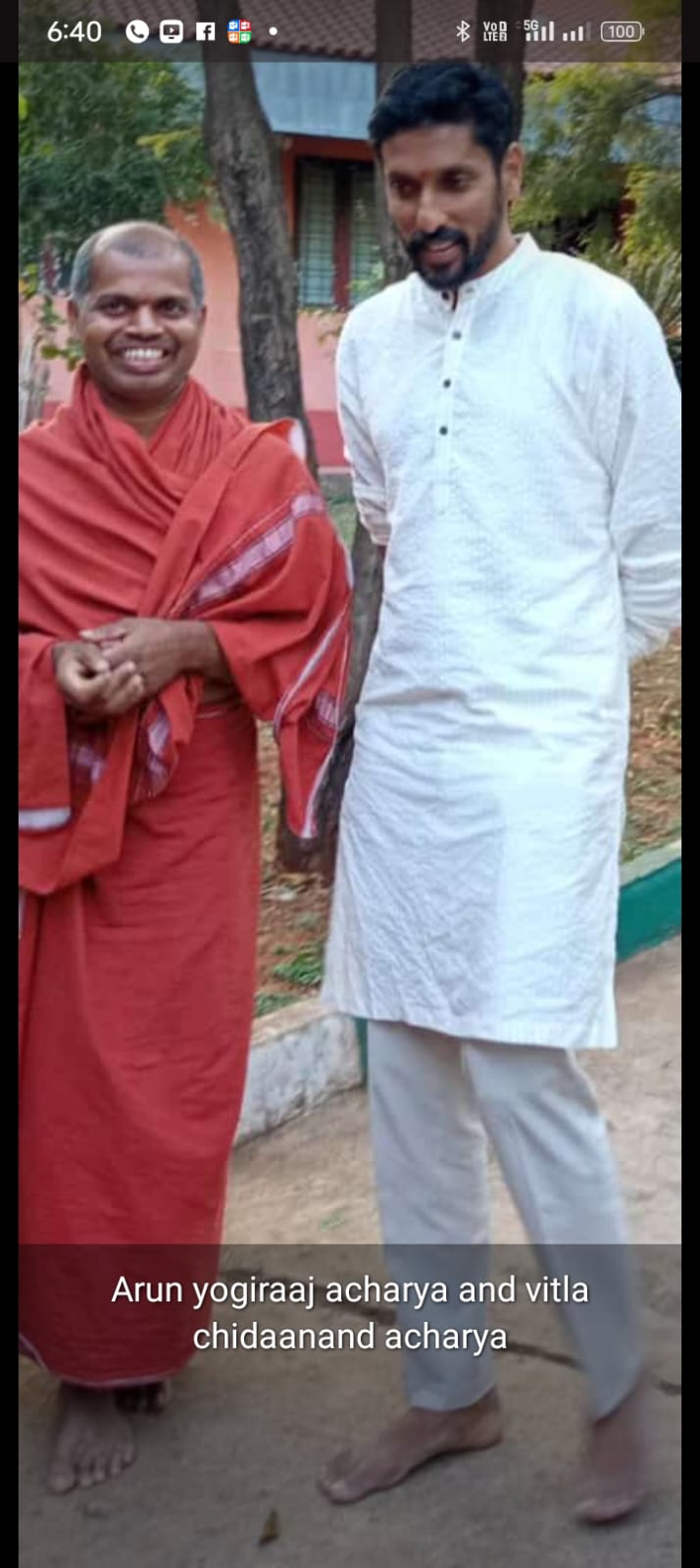
📱 Enquire on WhatsApp
Vitla, Dakshina Kannada · Kalagrama, Bengaluru

Sri M.
Chidananda
Acharya

Master Temple Sculptor & Portrait Artist

🏛️
Contributed to Ram Mandir, Ayodhya Idol sculptor for the Ayodhya Sri Rama Mandir — one of independent India's greatest sacred monuments
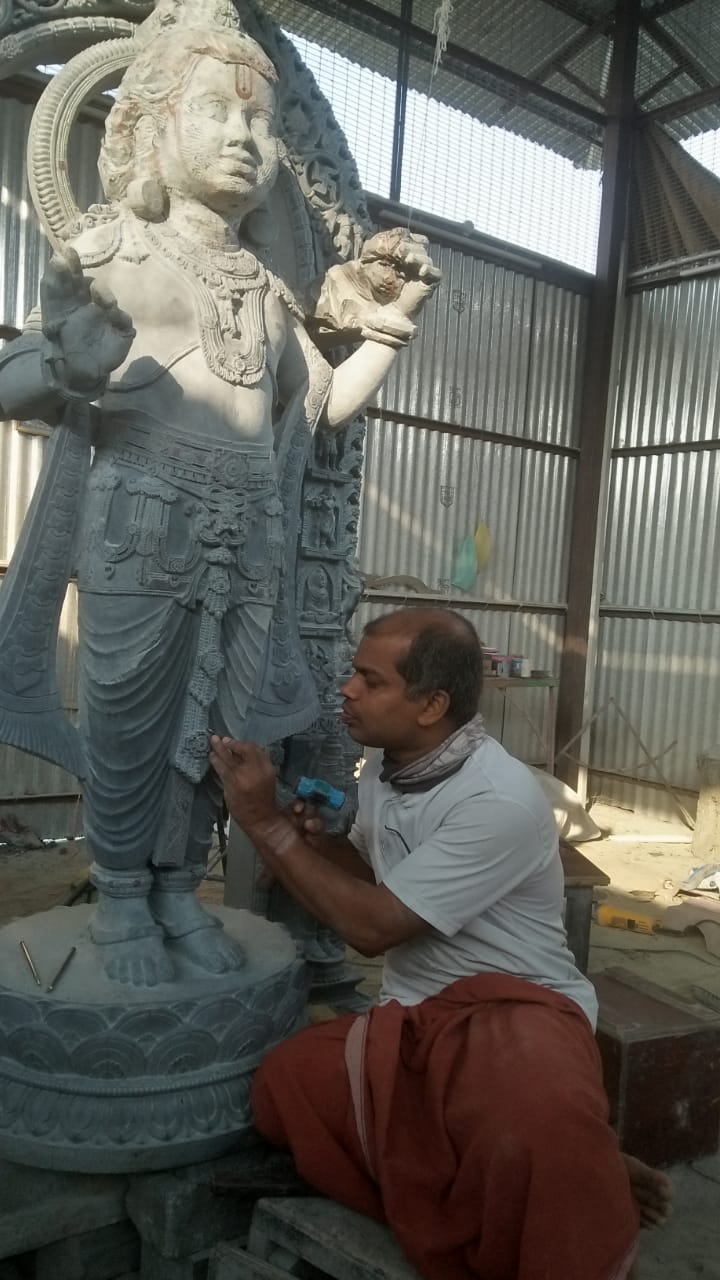
Sri Chidananda Acharya at work on a large temple deity sculpture
🏛️ Ram Mandir, Ayodhya Contributor 🗿 500+ Temple Idols Created 🎓 B.V.A — Karnataka Chitrakala Parishath 📍 Teaching at Kalagrama, Bengaluru ⭐ Hoysala & Kadamba Specialist 🏆 Sanman Patra Awardee 2024 🗺️ From Alke Village, Moodbidri — Dakshina Kannada ✦ Portrait Sculpture in Stone — Pratima Shilpa 🏛️ Ram Mandir, Ayodhya Contributor 🗿 500+ Temple Idols Created 🎓 B.V.A — Karnataka Chitrakala Parishath 📍 Teaching at Kalagrama, Bengaluru ⭐ Hoysala & Kadamba Specialist 🏆 Sanman Patra Awardee 2024 🗺️ From Alke Village, Moodbidri — Dakshina Kannada ✦ Portrait Sculpture in Stone — Pratima Shilpa
0+
Temple Idols Created
0+
Years of Sacred Craft
0
Sculptural Traditions Mastered
0
UNESCO Heritage Style (Hoysala)

The Science of Sacred Spaces

"A temple is not built — it is consecrated. Every proportion, every carving, every stone is placed according to a cosmic order refined over three thousand years."

Indian temple architecture is among the most sophisticated building sciences ever developed. What appears to the uninitiated eye as decoration is a precise cosmological language — a system of ratios, proportions, iconographic rules, and spatial hierarchies derived from ancient texts called the Agama Shastras and Shilpa Shastras. These texts prescribe the exact dimensions of a deity's finger relative to full-figure height, the curvature of the toe, the number of tiers in a temple tower. Temple sculpture is not art for its own sake — it is sacred science encoded in stone.

A master sculptor like Sri Chidananda Acharya must memorise and execute the complete iconographic programme of each deity — face proportions (talamana), specific gestures (mudras), sacred weapons (ayudhas), ornaments, vehicles (vahanas), and the relationships between all figures — entirely from memory, governed by scripture. No deviation is permitted.

🌐

Vastu Purusha Mandala

The cosmic diagram underlying every Hindu temple plan — an 8×8 or 9×9 grid with each square governed by a different deity. The garbhagriha (sanctum) is placed at the Brahmasthana, the precise centre — the navel of the cosmos. All dimensions radiate outward from this point in prescribed mathematical ratios.

📜

Agama & Shilpa Shastra

Ancient texts including the Manasara, Mayamata, and Brihat Samhita contain precise formulas for sculpting every deity. The Aparajitapriccha (12th century, Karnataka) specifically governs Hoysala temple design. Sri Chidananda Acharya has studied these under Dr. G. Jnananda at Karnataka Shilpa Akademi, Bangalore.

⚖️

Talamana — Canon of Proportions

Every deity is sculpted to a specific proportion system based on the face (tala) as base unit. Vishnu is 10 talas. Shiva is 9. Ganapati is 6. Each measurement — width of the eye, length of the arm, curvature of the toe — is scriptural. Mastering talamana takes years of dedicated study under a living guru.
Anatomy of a Temple

  • Garbhagriha — The womb chamber. Dark, enclosed, symbolising the primordial void from which creation emerges. The primary deity resides here over the Brahmasthana.
  • Antarala — The vestibule connecting sanctum to hall. A liminal space of transition from the outer world to the divine presence.
  • Mandapa — The pillared hall where devotees gather. Each pillar a cosmological statement ascending from earthly to celestial.
  • Vimana / Shikhara — The tower above the sanctum. Mount Meru — the mountain of the gods — made in stone. Its form differs by tradition: curvilinear in Nagara, pyramidal in Dravidian.
  • Gopuram — The monumental gateway tower of South Indian temples — often larger than the sanctum itself. The first and last encounter with the sacred.
  • Dvarapalas — Guardian figures flanking the sanctum door. Their precise proportions, posture, and weapons are fully prescribed by Agama scripture.

Foundational Texts

  • Manasara (c. 5th–7th century CE) — The most comprehensive ancient text on Indian architecture and sculpture. Covers temple design, idol proportions, and material science. Core reference for all shilpis.
  • Mayamata — A Vastu Shastra text attributed to the divine architect Maya. Prescribes dimensions and forms for temples, palaces, and human settlements.
  • Brihat Samhita (Varahamihira, c. 6th century CE) — Chapters 56–58 deal specifically with temple construction, idol proportions, and iconographic rules.
  • Aparajitapriccha (12th century, Karnataka) — Governs the stellate plan and sculptural programme of Hoysala temples specifically. Critical text for Hoysala specialists.
  • Agamas — Sectarian texts (Shaiva and Vaishnava) prescribing the complete ritual life and iconographic requirements of each temple and its resident deity.
  • Vishnu Dharmottara Purana — Contains the famous teaching: "Without understanding of sculpture, painting cannot be mastered." All traditional arts are one interconnected science.

Three Paths of Sacred Craft

From temple installation pieces to personal devotional idols to photorealistic stone portraits — Sri Chidananda Acharya's studio covers the full spectrum of sacred and commemorative stone carving.

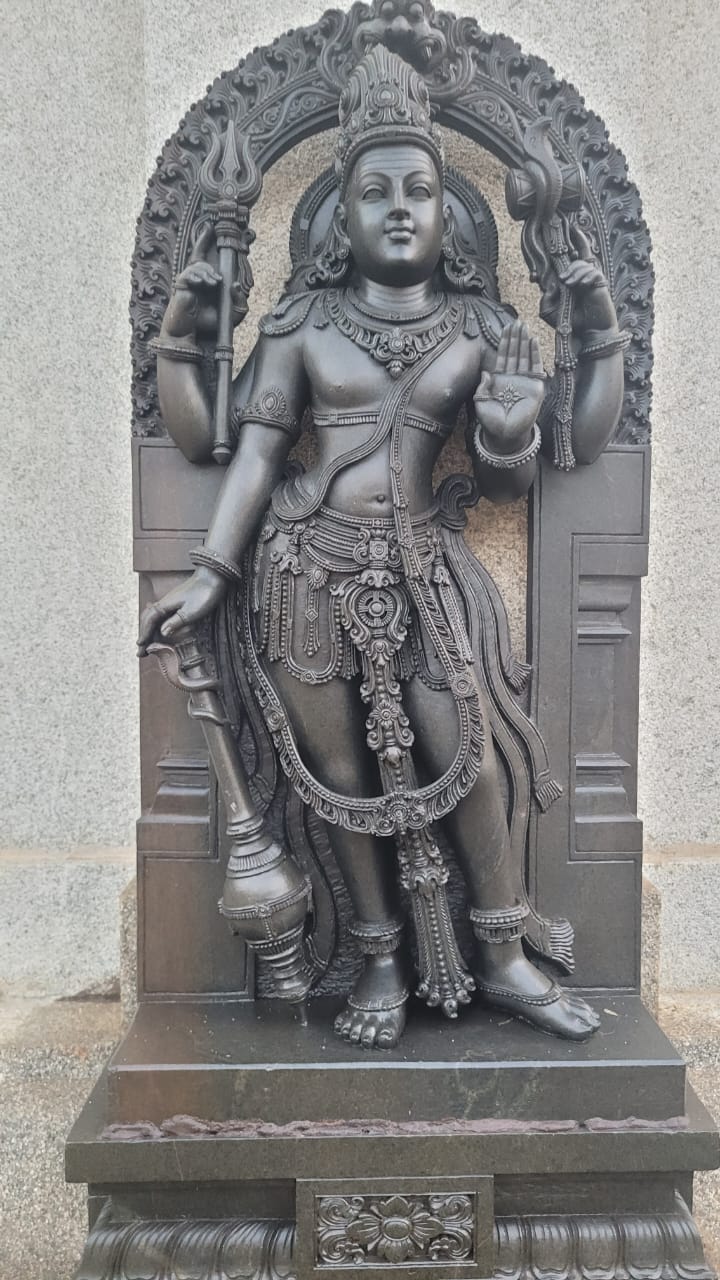
Large standing Vishnu deity in polished black granite — temple installation piece
🕉️

Temple Deity Sculptures

Devata Pratima Shilpa

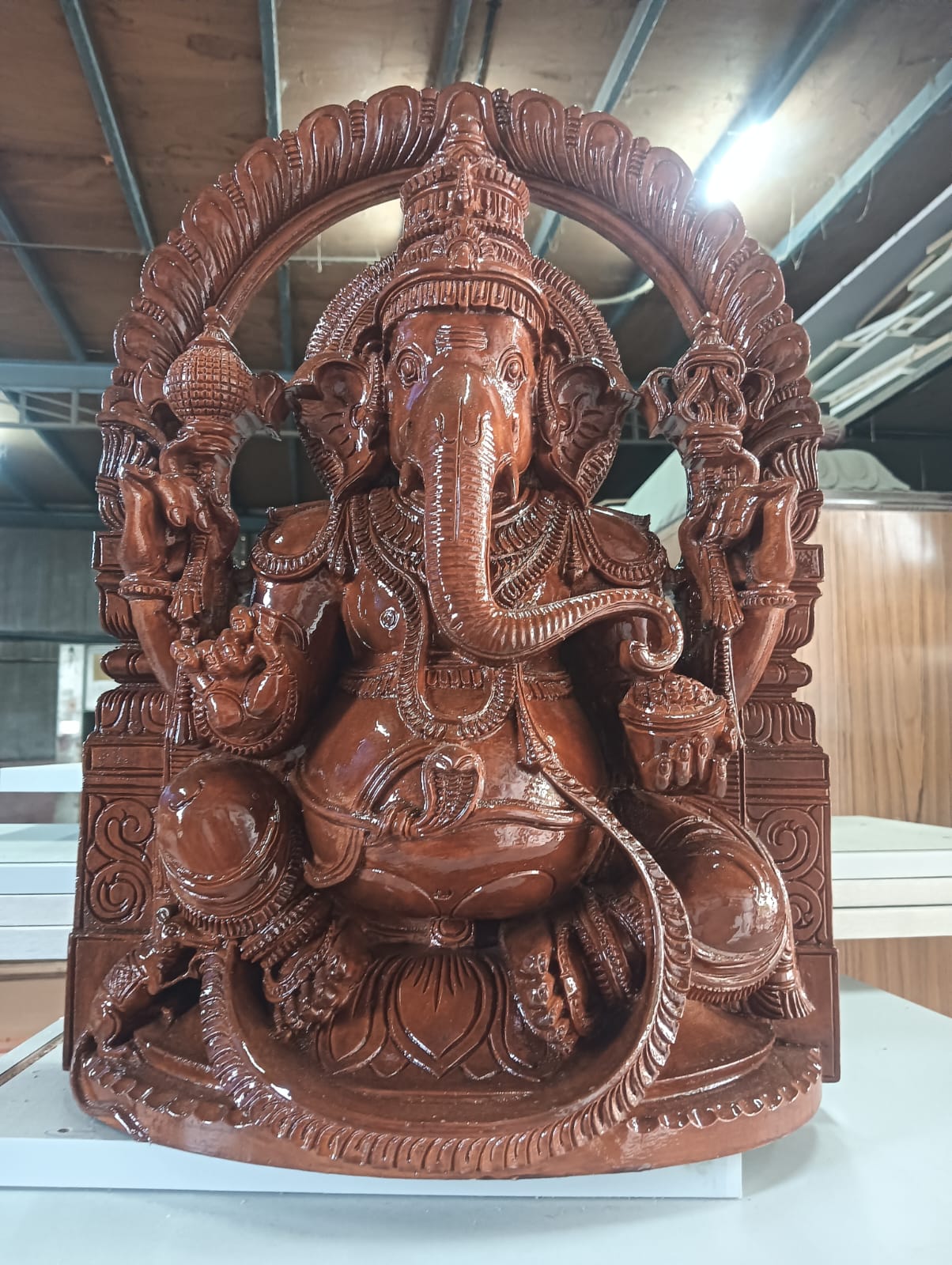
Full-scale deity idols for temple garbhagrihas, entrance dvarapalas, mandapa pillars, and architectural panels. Every piece is executed strictly according to Agama Shastra proportions in the correct stone, facing, and posture for the deity. Available in granite, marble, sandstone, and soapstone.

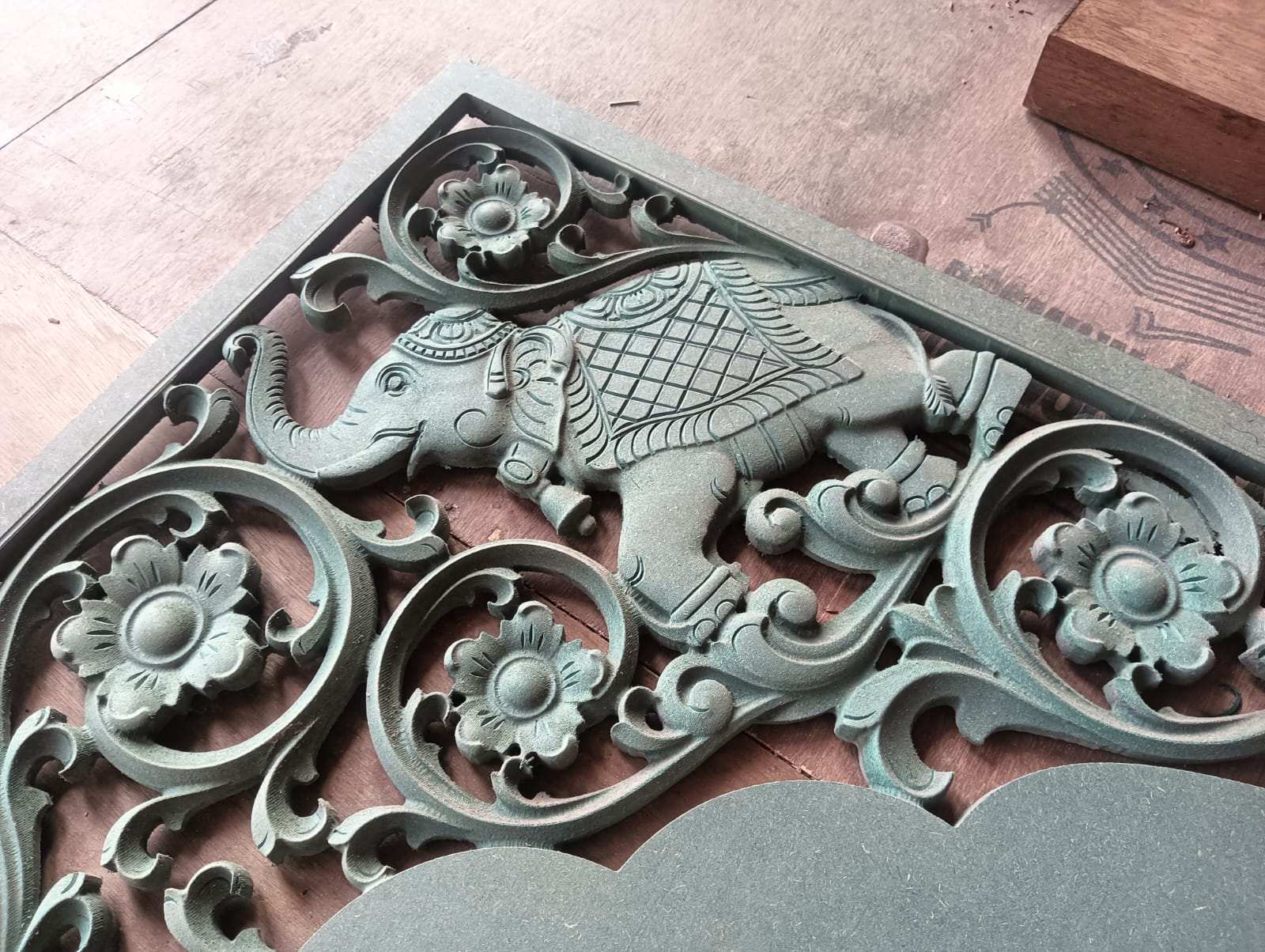
Hoysala-style elephant relief panel carved in green soapstone with elaborate floral scrollwork

Hoysala & Kadamba Style

Heritage Karnataka Sculpture

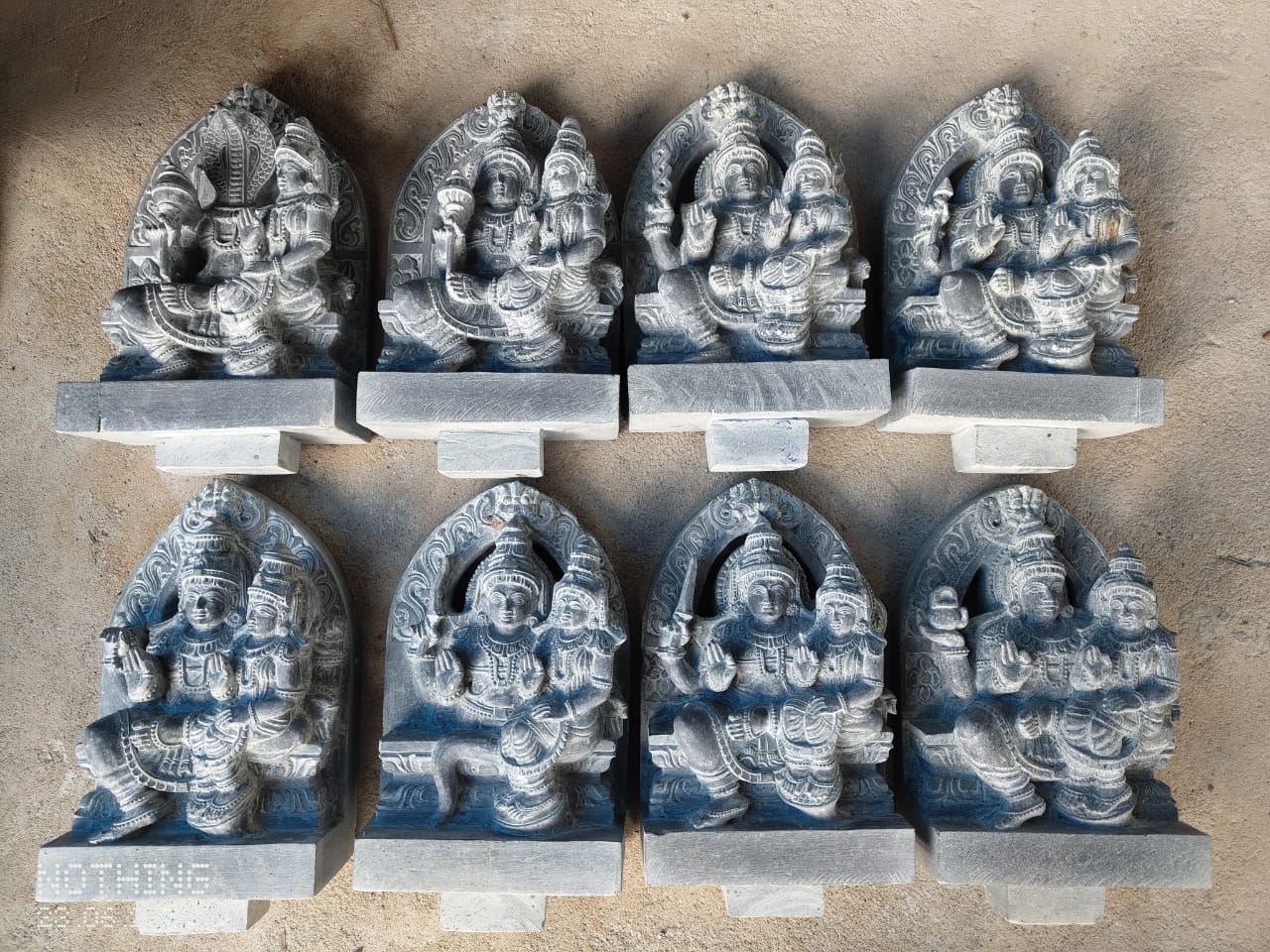
Sri Chidananda Acharya's primary specialisation — the two great sculptural traditions of Karnataka. Hoysala work in chloritic schist (soapstone) with its characteristic stellate platforms and all-over carved friezes. Kadamba style in its dignified, austere tower form. Both are rare living traditions.

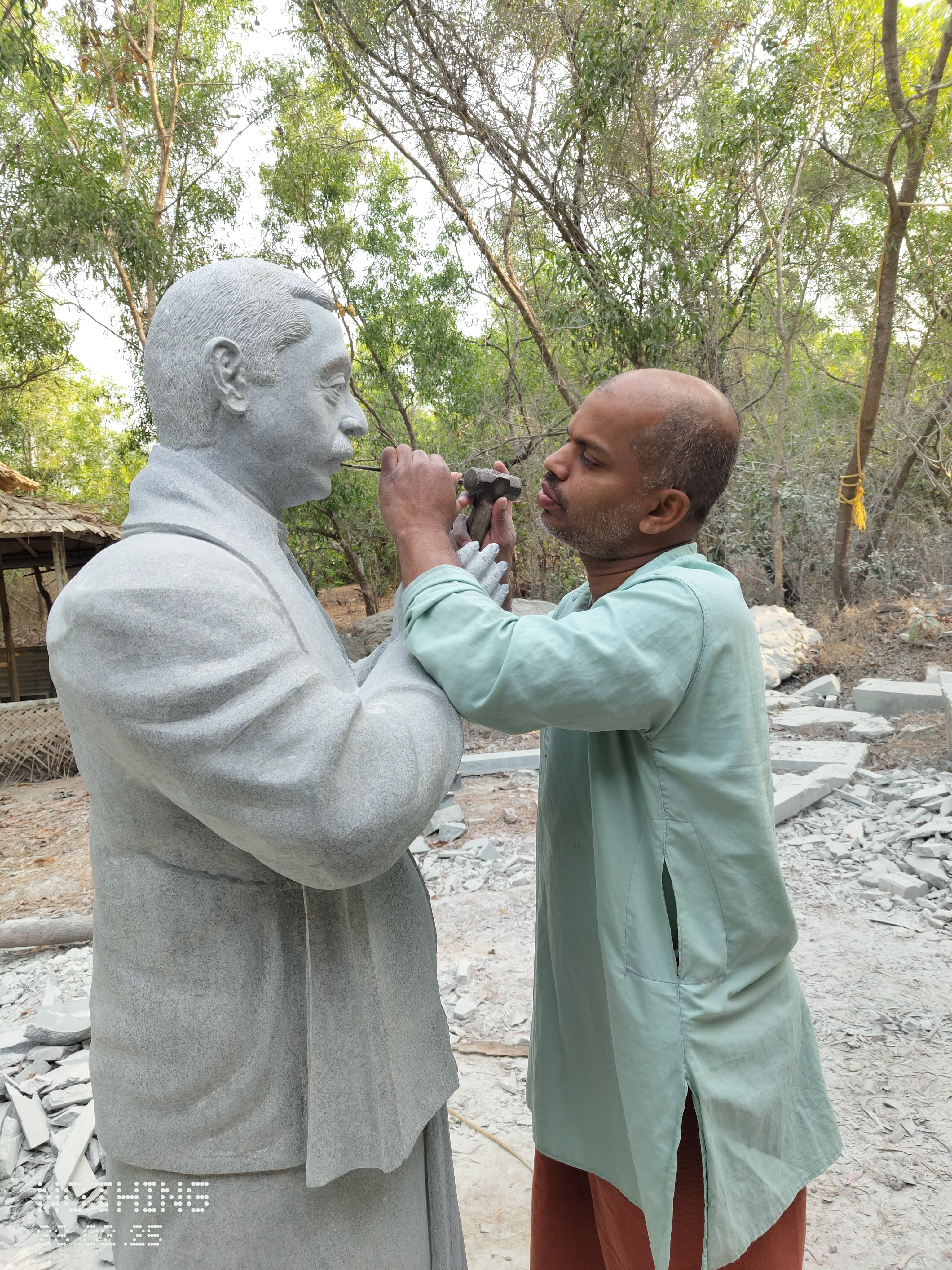
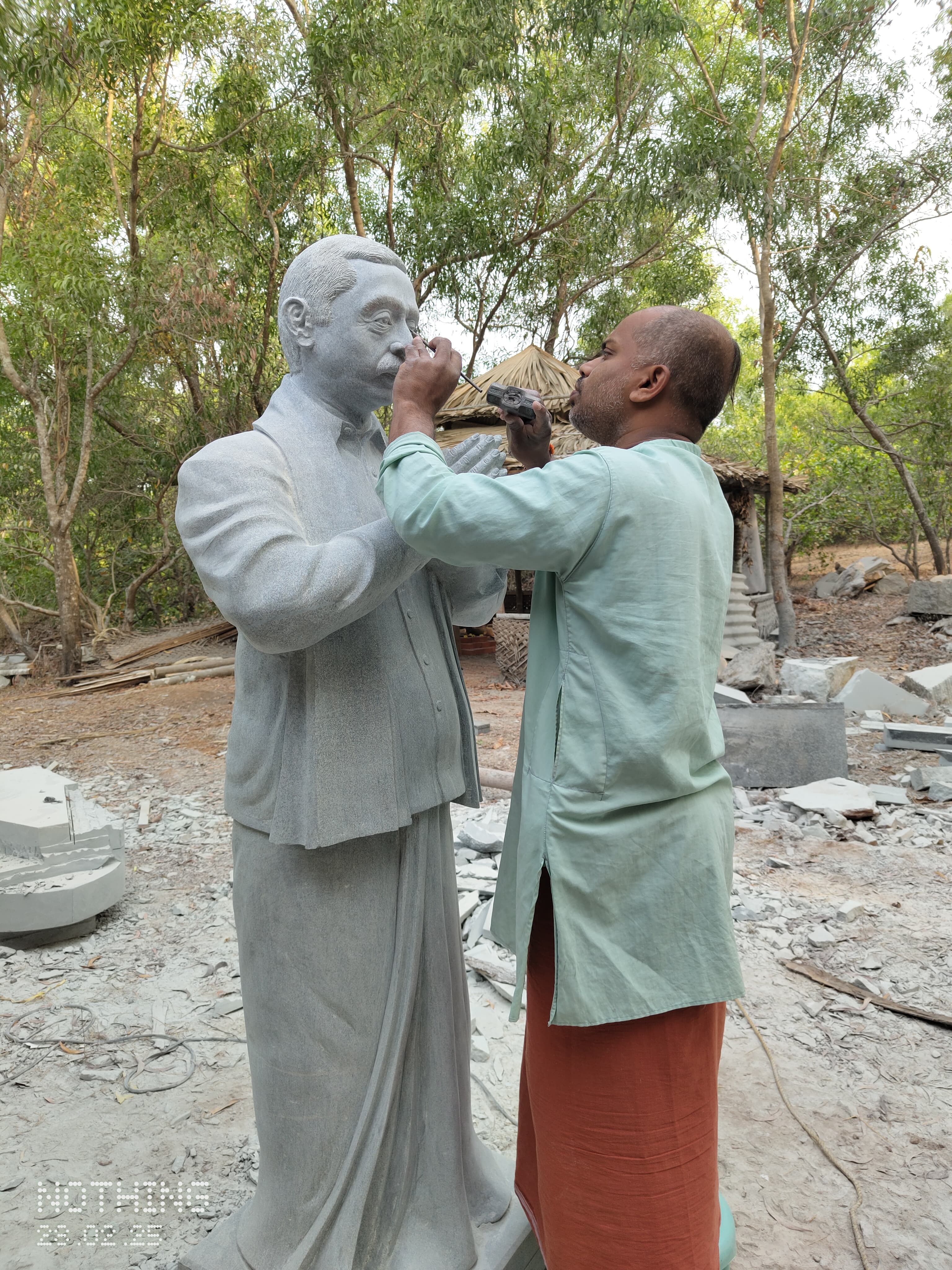
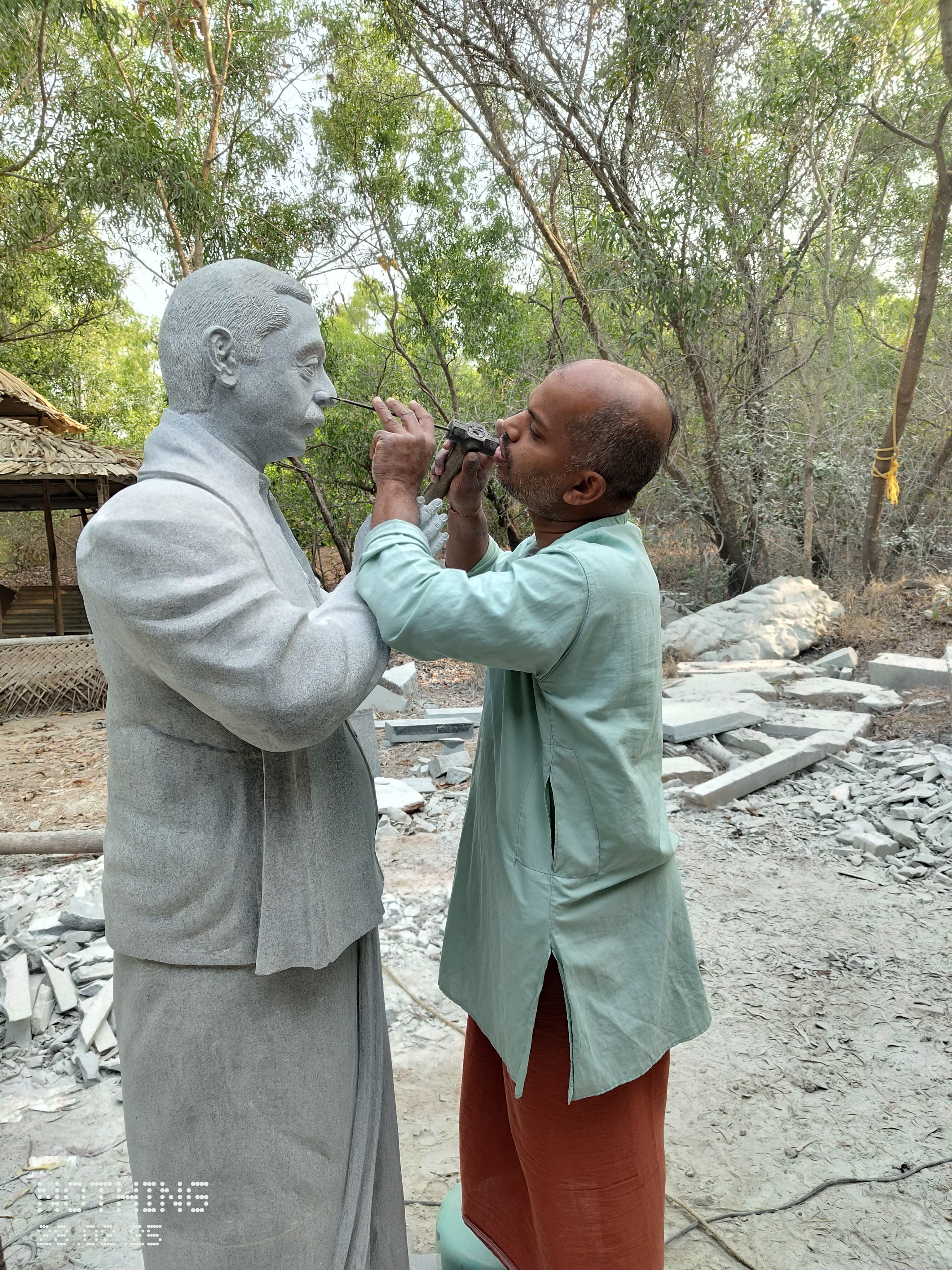
Sri Chidananda Acharya carving a photorealistic stone portrait of a public figure
🗿

Portrait Sculpture in Stone

Pratima Shilpa — Stone Portraiture

A rare and exceptional capability — Sri Chidananda Acharya can sculpt the photorealistic likeness of any living or historical person in granite or marble. Ideal for memorial statues, institutional commemorations, and personal tributes. The person who stands next to him can be immortalised in stone.

Six Schools of Temple Architecture

India's temple traditions are as diverse as its landscape — each regional school evolved distinct architectural languages over centuries. Understanding all six traditions is the foundation of a master sculptor's knowledge.

Kadamba Style
Karnataka · 4th–10th century CE

One of Karnataka's oldest and rarest temple traditions. The Kadamba Shikhara — a stepped pyramidal tower of flat horizontal bands — is the direct ancestor of all later Deccan styles. Very few living sculptors are trained in this tradition. Sri Chidananda Acharya is one of them.

  • Stepped box-like tower with flat horizontal tiers — the Kadamba Shikhara
  • Austere, dignified sculptural programme — each figure commands full attention
  • Direct ancestor of both Chalukya and Hoysala styles
  • Extremely rare — very few active practitioners in India today

Famous Examples: Madhukeshwara Temple (Banavasi) · Doddagaddavalli Temple

Hoysala Style
Karnataka · 10th–14th century · UNESCO 2023

UNESCO World Heritage since 2023. The Hoysala tradition represents one of the highest achievements of sculptural craft in world history — every surface covered in exquisitely detailed carvings in soft chloritic schist (soapstone) that hardens permanently on exposure to air.

  • Star-shaped (stellate) platform — the iconic Hoysala floor plan
  • Five horizontal friezes: elephants, horses, foliage, narrative scenes, deities
  • Chloritic schist — uniquely workable stone, harvested in Karnataka
  • Individual sculptors historically signed their work — rare in world art

UNESCO Sites: Belur · Halebidu · Somnathpur

Dravidian Style
Tamil Nadu · 600 CE – Present

The defining architecture of South India. Monumental gopurams (gateway towers) reaching 60 metres, covered in thousands of painted stucco figures. Dense, exuberant, teeming with iconographic detail. Originated under the Pallava kings; perfected under Chola, Pandya, and Vijayanagara rulers.

  • Pyramidal vimana with horizontal tiers (talas)
  • Gopurams larger than the main sanctum — unique to Dravidian style
  • Granite primary material with stucco figures on gopurams

Famous: Brihadeeswarar (Thanjavur) · Meenakshi Amman (Madurai)

Kerala Style
Kerala · 9th century – Present

Shaped by the monsoon landscape, Kerala temples have sloping copper-tiled roofs over stone structures. Unique integration of teak wood carving alongside stone sculpture creates an unmatched textural richness. Intimate, darkened sanctums; exceptional mural painting traditions within.

  • Sloping gabled roofs (copper-tiled) designed for heavy rainfall
  • Circular or square sanctums — unusual in Indian tradition
  • Exceptional wood carving alongside stone sculpture

Famous: Padmanabhaswamy (Thiruvananthapuram) · Vadakkunnathan (Thrissur)

Chalukya Style
Karnataka · 6th–12th century CE

The first great synthesis of Nagara and Dravidian traditions, creating the "Vesara" hybrid style. The experimental temples of Aihole, Badami, and Pattadakal — where builders tried every architectural form — directly shaped all subsequent Karnataka temple traditions including Hoysala.

  • First systematic synthesis of North and South Indian styles (Vesara)
  • Experimentation with plan forms — rectangular, apsidal, circular
  • Cave temples alongside structural temples (Badami caves)

Famous: Pattadakal · Aihole (Durga Temple) · Badami Cave Temples

Nagara Style
North India · 5th century CE – Present

The dominant tradition of North India — defined by its curvilinear shikhara rising like a mountain peak. The Ram Mandir, Ayodhya — where Sri Chidananda Acharya contributed as idol sculptor — is built in the Nagara tradition, making this style personally significant in his portfolio.

  • Curvilinear (Latina) shikhara with ribbed surface projections
  • Amalaka — ribbed disc crowning the tower; Kalasha — pot finial above
  • Ram Mandir Ayodhya is a landmark Nagara temple — our artisan's proud contribution

Famous: Ram Mandir (Ayodhya) · Lingaraja (Bhubaneswar) · Khajuraho

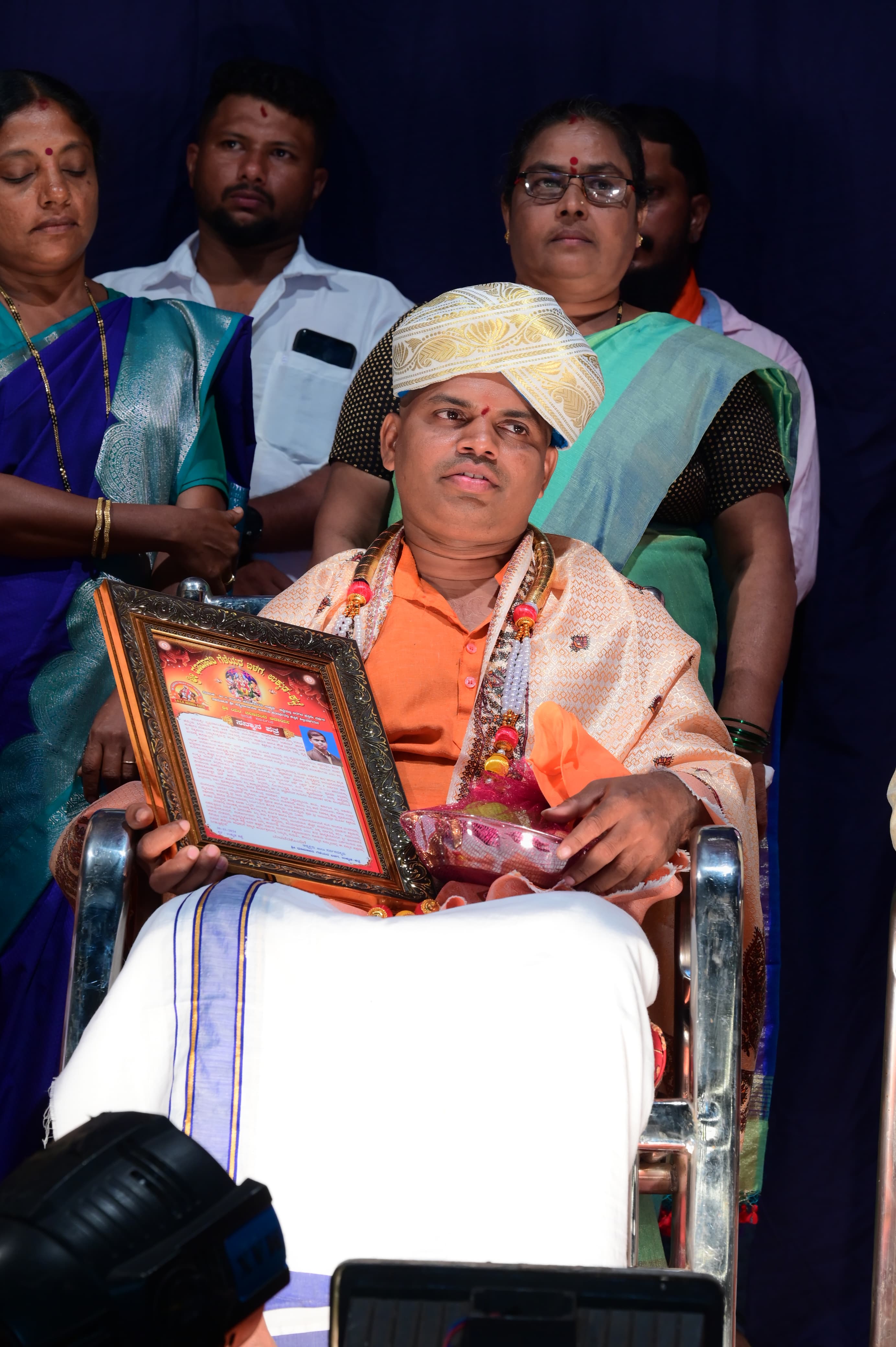
🏆 Sanman Patra
Ukkuda Katte · 2024
Sri Chidananda Acharya receiving the Sanman Patra award at a felicitation ceremony
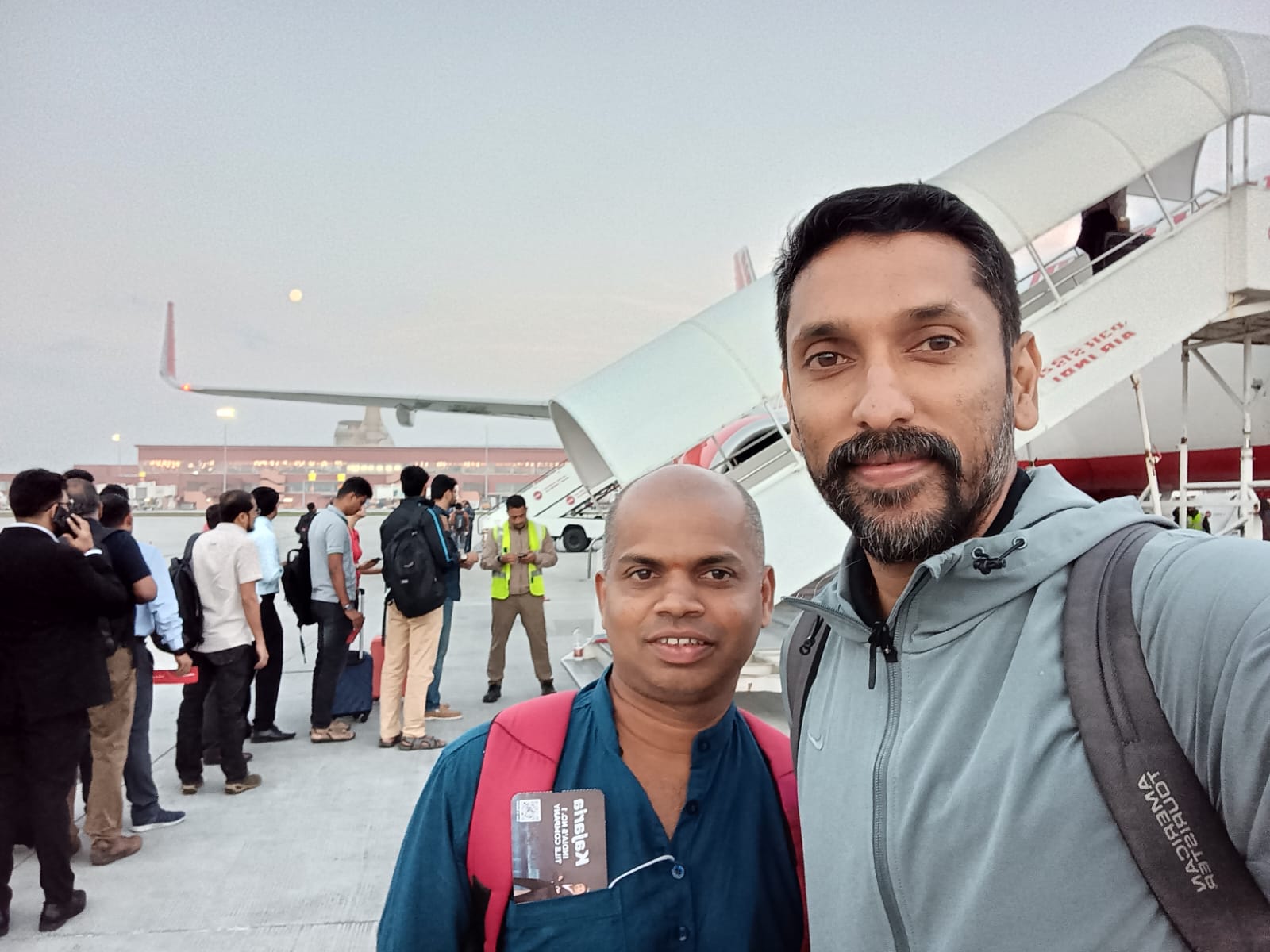
Sri Chidananda Acharya at the airport, travelling to Ayodhya for the Ram Mandir project

A Journey in Stone

Some artists choose their craft. Others are born into it — shaped by soil, ancestry, and a calling older than memory. Sri Chidananda Acharya is of the second kind. From the coastal sacred geography of Dakshina Kannada to the cultural heart of Bangalore, his life has been one of sustained devotion to the ancient science of sacred stone.

Origin · 1983
Alke Village, Moodbidri — Dakshina Kannada

Born and raised in the sacred coastal landscape of Dakshina Kannada — a region rich in Tulu temple traditions, yakshagana art, and a living sculptural heritage. Early education at Sri Sathya Sai Vidyasamsthe, Alke. First wood carving work began in 2002.

2004 — Gurukula Training Begins
Traditional Shilpa Gurukula — Stone Sculpture

Initiated into stone carving under Guru Sudhakar Acharya. Further trained by Ramakrishna Acharya at Ukkuda, establishing a 8-student Shilpa Gurukula. Three further years at Brahmasri Shilpa Gurukula, Chikkaballapura. Then formal degree studies — B.V.A. (Bachelor of Visual Arts) from Karnataka Chitrakala Parishath, Bengaluru, under Dr. G. Jnananda.

Active Career
500+ Temple Idols — Across India

Commissions for: Indira Gandhi National Centre for Arts (New Delhi) · Kannada Vishwavidyalaya (Hampi) · Karnataka Shilpa Akademi (Bengaluru) · Bharatiya Vidyabhavana (Mysore) · Alva's Nudisiri · Kadamba Shilpa Shaale · Dasara Utsava (Mysore) · temples across Uttar Pradesh and Karnataka.

2024 — National Recognition
Ram Mandir, Ayodhya — Idol Sculptor

Selected as idol sculptor for the Ayodhya Sri Rama Mandir — one of the most significant Hindu temples built in modern India. Created sacred idols for the temple, flying to Ayodhya as part of the select group of artisans entrusted with this historic project. Received Sanman Patra from Sri Dhumavathi Gelayara Balaga, Ukkuda Katte — November 30, 2024.

Present
Teaching at Kalagrama, Bengaluru

Resident master sculptor at Kalagrama — Bengaluru's government art village on Mysore Road — transmitting the ancient traditions of Hoysala, Kadamba, and classical temple sculpture to the next generation. Accepting commissions for temple installations, home shrines, institutional collections, and portrait sculpture.

Pratima Shilpa
Portrait Sculpture in Stone

Among Sri Chidananda Acharya's most remarkable capabilities is his ability to carve a photorealistic likeness of any living or historical person in granite or marble. This art — called Pratima Shilpa (the art of sculpted portraiture) — is extraordinarily rare. The person who stands next to him today can be immortalised in stone.

  • 🗿
    Any person, immortalised in stone
    Commissions accepted for memorial statues, busts, and full-figure portraits of living or historical figures.
  • 📐
    Multiple materials and scales
    Available in granite (black, grey), marble, and sandstone. From 1-foot busts to life-size standing figures.
  • 🏛️
    Institutional & memorial commissions
    Ideal for government commemorations, university statues, society founders, spiritual leaders, and family memorials.
  • 📷
    From photographs
    A portrait commission begins with reference photographs and a detailed brief. No in-person modelling sessions required.
Enquire for Portrait View All Commissions
Sri Chidananda Acharya carving a detailed realistic face on a life-size granite portrait
Close-up of portrait sculpture work showing detail of facial carving in granite
Sri Chidananda Acharya at work on a life-size realistic stone statue

Commission a Sacred Sculpture

Every sacred sculpture begins with a conversation — about the deity, the purpose, the tradition, the material, and the space it will inhabit. Sri Chidananda Acharya accepts commissions for temple installations, home shrine pieces, institutional statues, portrait work, and architectural elements.

01
Consultation & Brief

Share your requirements — deity, style, dimensions, material, and purpose. We discuss scriptural specifications and iconographic requirements. Available via WhatsApp or in person at Kalagrama.

02
Design & Approval

Detailed sketches prepared. Talamana proportions confirmed. Stone selected. Timeline and pricing agreed. Formal work order issued with milestones and advance payment schedule.

03
Carving & Delivery

Work commences at the Kalagrama studio. Progress photographs shared at key milestones. Completed piece is ritually consecrated (on request) and safely delivered or arranged for transport.

Commission Enquiry

Get in Touch

We welcome enquiries from temple trusts, cultural institutions, collectors, interior designers, families seeking home shrine pieces, and individuals interested in portrait commissions. Response within 24 hours.

📱
WhatsApp (Fastest Response)
+91 XXXXX XXXXX
📧
Email
contact@chidanandashilpa.in
📍
Studio Location
Kalagrama Art Village, Mysore Road, Bengaluru
🕐
Studio Visiting Hours
Monday – Saturday · 9:00 AM – 6:00 PM
🗺️
Native Place
Alke Village, Moodbidri · Dakshina Kannada

Send a Message